Media, Power and the Truly Educated Person in a Media-Saturated World
Introduction
Media has become part of almost every moment of daily life we wake up to notifications, scroll social media, watch videos, and often form opinions or make small decisions (what to buy, watch, or believe) through media before we've consciously thought about it. Reading Dilip Barad's blog, "Cultural Studies: Media, Power and Truly Educated Person," made me realise that Cultural Studies isn't only about literature or popular culture it's about power, representation, and education, and about how these three things are tied together through media.
This raised a question I kept returning to: if media shapes what I see every day, does it also shape how I think? The blog helped me work through this question along four lines media and power, the role of education, cultural representation, and critical media consumption and I've tried to connect each to something from my own experience, not just the blog's argument.
Media and Power: Who Controls What We See?
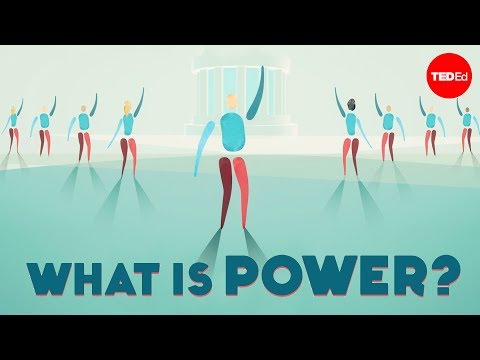
Blog argues that the study of Cultural Studies is incomplete without studying power, and that in contemporary society, media print, television, digital, social has become one of the main tools through which power operates. He draws on Chomsky and Herman's idea of "Manufacturing Consent,"
This videos explains this - 'Manufacturing Consent'.
Chomsky and Herman's idea of "Manufacturing Consent," explaining their five filters: media ownership, advertising, the media elite, flak, and a common enemy. The point isn't that media always lies outright, but that the selection of what gets covered, and how, is shaped by the structures media sits inside who owns it, who advertises on it, who is punished for going against the grain.
What struck me most is that media doesn't just tell us what happened it shapes how we understand what happened. A headline, a thumbnail, a fifteen-second clip can decide which detail of an event we remember and which we forget entirely.
I've noticed this directly. During a recent controversy that trended on Twitter/X and Instagram simultaneously, one platform's short clips framed it almost entirely around outrage and blame, while a longer YouTube explainer on the same topic gave context that completely changed how serious the issue actually was. I had already formed an opinion from the fifteen-second version before I ever watched the longer one and that gap is exactly what Barad is pointing to: visibility itself becomes a form of power, because whatever gets repeated the most starts to feel like the most important or most true version of events, regardless of accuracy.
But this isn't only a story of control. The same digital platforms that can manufacture consent also let ordinary people question it a point Barad's framework leaves room for even if he doesn't dwell on it. Media, then, is both a tool through which power operates and a tool through which power can be questioned.
Media, Culture and Identity
Media doesn't just reflect culture it actively shapes it. Trends that circulate on Instagram or YouTube influence how people my age dress, speak, and present themselves, often simply because repetition makes something feel normal rather than chosen. I've caught myself doing this with something as small as a style of photo caption or a way of talking that spread from a few popular creators until it seemed like "how everyone talks now."
This becomes more serious when it comes to marginalized groups. If a community is shown repeatedly through one narrow stereotype a particular religion, caste, region, or gender role reduced to a single trope in films or memes audiences absorb that narrow version as the whole picture. Barad's blog frames this as a question of who controls representation, and I think it's worth asking directly: who is being represented, who is speaking, who is missing, and whose perspective is treated as the default?
The encouraging part is that the same media that can flatten a group into a stereotype can also let that group speak for itself. Creators from underrepresented backgrounds using Instagram or YouTube to narrate their own experience, without needing a mainstream channel's permission, is a real example of media working as resistance rather than control bypassing the "media elite" gatekeepers Chomsky describes.
The Role of Education: What Is a "Truly Educated Person"?
Barad challenges the idea that education is just information, exams, and degrees. Drawing on Chomsky, he connects being "truly educated" to independent inquiry the ability to "formulate serious questions," "question standard doctrine," and "find your own way," rather than simply reproducing what one was taught.
This reframes something I do almost daily without thinking about it. When I read a claim on social media, being "educated" about it doesn't mean remembering the claim it means asking who made it, why, and whether another perspective exists. A traditional idea of education asks "what do you know?" In that blog there is version also asks "how do you know it, and why do you believe it?"
Based on this, I'd say a truly educated person today needs: critical thinking (questioning instead of accepting immediately), media literacy (understanding how media messages are constructed), cultural awareness, independent thinking, self-questioning (examining one's own biases), and responsible media behaviour pausing before believing or sharing.
Critical Media Consumption: From Scrolling to Questioning
Media is central to my student life I regularly use YouTube for a second explanation of a difficult topic when a textbook or lecture isn't enough, and it genuinely helps. But I've also noticed how easily "checking one video" turns into forty-five minutes of unrelated scrolling I didn't plan on. That drift isn't really about the platform being bad; it's about how little resistance I put up once the algorithm has my attention.
I've also noticed how repetition quietly resets my sense of "normal." Seeing a particular lifestyle or body type or standard of success shown over and over on Instagram started to feel like the default until I reminded myself that what's posted is a curated fraction of someone's life, not the whole of it.
Critical media consumption, for me, means shifting from "I saw it, so it must be true" to "I saw it, so let me check it." In practice, that means asking: who created this, why, and is it information, opinion, or advertising dressed up as either? What's missing, and can I find a source that disagrees with it before I accept it?
Conclusion
Barad's blog helped me see that media, power, culture, and education are not separate topics they run through each other. Media can reinforce stereotypes and concentrate power in a few hands, but it can also give visibility to voices that were previously excluded. Education, in this light, isn't finished with a degree; it's an ongoing habit of asking who benefits from a version of events and whether another version exists.
For me, that's the real shift Barad's blog pushes toward: from consuming media to questioning it and that questioning, more than any qualification, is what it means to be truly educated in a media-saturated world.
Reference: Barad, Dilip. "Cultural Studies: Media, Power and Truly Educated Person." Dilip Barad | Teacher Blog, 22 Mar. 2017, blog.dilipbarad.com/2017/03/cultural-studies-media-power-and-truly.html.


.png)


.png)

No comments:
Post a Comment